ट्रांसफार्मर की मजेदार कहानी

By then, the time has come for houses to get electricity. While Edison was busy demonstrating how dangerous AC is by electrocuting elephants, Tesla and his team came up with the transformers which made transmitting electricity a lot easier and efficient. Even, today Transformers play a vital role in the transmission system. Let’s know why.
Transmitting electricity with high voltages and low currents will help us reduce the thickness of the transmission wires and thus the cost, it also increase the efficiency of the system. For this reason a standard transmission system can be anywhere between 22KV to 66KV, while some generators in the power plant has an output voltage of only 11kV and the household AC appliance require only 220V/110V. So where does this voltage conversion take place and who does it.
The answer to the question is transformers. From the power plant to your home there will be transformers in the system which will either step-up (increase voltage) or step-down (decrease voltage) the voltage to maintain the efficiency of the system. This is why the transformers are called as the heart of an electrical transmission system. We will learn more about them in this article.
Transformer Symbols
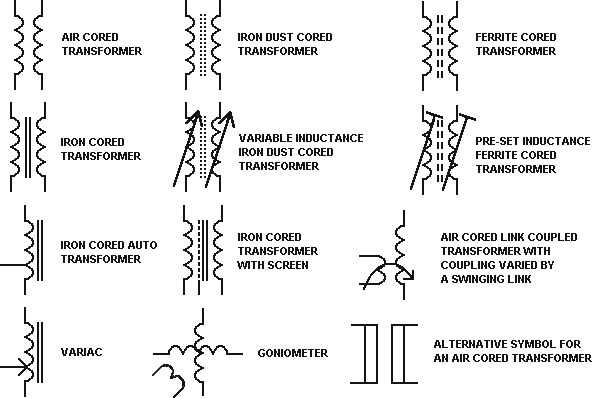
The circuit symbol for a transformer is simply two inductors put together side by side sharing the same core. The nature of the line in between the two windings indicates the type of core used: A dashed line represents ferrite, two parallel lines represent laminated iron and no line represents air core.
Sometimes the number of ‘bumps’ is used as a rough indicator of the transformer function – less bumps on one side and more on the other may mean that the first side has a smaller number of turns than the other.

Makes your toilet clean, germ - free & hygienically fresh in just 90 seconds. Unique colour changing formula shows the product working.. Convenient and easy to use.


Comments
Post a Comment
If any doubts let me know..